


Search results for " CVV Amsiga.comoJM3t5i us apple pay mEhJ"
Matching terms: apple, use, used, useful, uses, using
diagnostic character
Furcula
No telson, but slender furcula at end of abdomen used for jumping.
Glossary
pinnate
feathered; plumed; winged. Used in reference to gill venation that appears feather-like.
diagnostic character
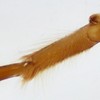
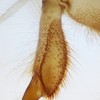
Fossorial Foretibiae
The Foretibiae (the shins of the first pair of legs), are expanded/enlarged, and used for burrowing in sediment.
Glossary
labial mask
extendable mask-like mouth part of a dragonfly or damselfly nymph, used to capture prey.
Glossary
palmate
like the palm of the hand with processes stemming from a singular point, used in reference to gill venation.
diagnostic character
Raptorial Legs
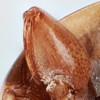
Forelegs are raptorial, suitable for use in predation, with broad femora, and weakly convex dorsally.
diagnostic character
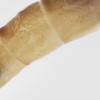
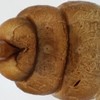
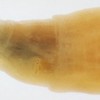
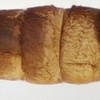
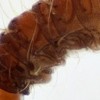
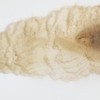
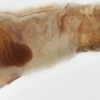
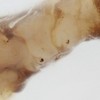
Legs Absent
(Diptera)
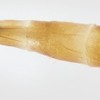
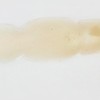
Segmented legs absent from thorax, but sometimes with prolegs (fleshy nubs used for movement).
diagnostic character
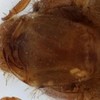
Flat Mask
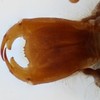
Labial mask flattened. This is a arm-like extremity that covers the mouth parts and is used for capturing prey.
diagnostic character
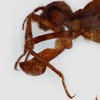
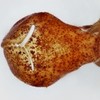
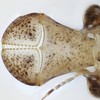
Spoon-shaped Mask
Labial mask spoon-shaped. This is a arm-like extremity that covers the mouth parts and is used for capturing prey.
Glossary
proleg
fleshy unsegmented nub, often paired, used for movement (e.g., on the abdomen of most caterpillars and some flies; on the thorax of some fly larvae).
Glossary
glossae
part of the mouth parts/labrum, pair of lobes used much like a tongue. Smaller, and just inside of paraglossae. See image.
Glossary
paraglossae
part of the mouth parts/ labrum, pair of lobes used much like a tongue. Larger and just outside of glossae. See image.
Glossary
trachea
internal tubes filled with air that the insect uses for breathing. Sometimes visible through the gills of aquatic insects, vein-like in appearance.
Glossary
deciduous
falling off at certain periods. For example, this term is used to describe the gills of nymphs in the family Heptageniidae (Ephemeroptera), which fall off easily when handled.
diagnostic character
Dorsal Premental Setae
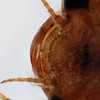
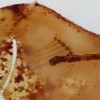
Dorsal premental setae present. These are hairs located inside the mask, on the palm. If the mask is closed you will have to use forceps to gently open it.
Glossary
sulcus
groove with purely functional origin; i.e., any other groove on the body that is not a suture, such as those used for ecdysis or muscle attachment. Plural form is sulci.
diagnostic character
Labial Mask
(Odonata)
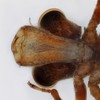
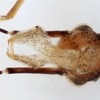
Nymphs with mask-like labium (lower lip) covering the chewing mouth parts. This is an extendable arm-like appendage used to capture prey. It is always visible ventrally, but may be visible dorsally if it is extended.
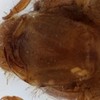
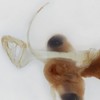
family
Diptera
Simuliidae, “Black Flies”
There are over 255 North American species in this family. The genera Simulium and Prosimulium include most of these. Larvae spin a pad of silk and glue it it to the substrate, then use hooks on the posterior end to grasp the silk pad and suspend themselves in the current, where they feed. If a larva is disturbed by a predator it uses a strand of silk from their mouth that is tethered to the substrate to climb back to their rock once the predator has left. They use comb-like fanning structures on their head to filter food from the water. Generally, this group is considered tolerant to pollution, however, they can be found only in clean water as well, depending on the species. Adult black flies are terrestrial, and the females are biting pests. The bites can cause allergic reactions in some people, and in cases where the numbers are high can cause blood loss and become dangerous for some mammal species. In the tropics, flies in this family can transmit diseases such as river blindness. Fly fishermen often refer to members of this group as smuts, and sometimes use larvae or pupae in their fly patterns.
Glossary
accessory
Usually used to describe a small secondary structure. For example an accessory flagellum refers to a small flagellum attached to the antenna, or an accessory hook often refers to a small hook protruding from a larger anal hook.
genus
Diptera
Chironomidae
Chironomus
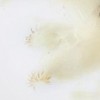
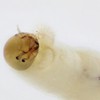
There are more than 20 species of Chironomus. The genus is known commonly as blood worms in the aquarium trade and species are used as fish food. They get the name from their bright red color, produced by a type of hemoglobin-like protein.
diagnostic character
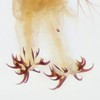
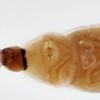
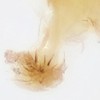
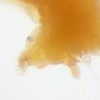
Thoracic And Anal Prolegs
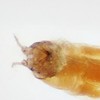
Paired hook-bearing prolegs (fleshy nubs used for movement) are present on the prothorax and at the posterior end of the body. At first glance these may appear as a single proleg, but they are paired, the division may be slight and only at the apex of the proleg.
genus
Diptera
Ptychopteridae
Ptychoptera
10 species in North America. Adults are pretty interesting as they seem to disappear during flight. They will glide in the breeze with their long legs out and barely use their wings. A fantastic video of the genus Bittacomorpha shows their flight.
family
Odonata
Coenagrionidae, “Narrow-winged Damselflies”
This is the largest damselfly family, including roughly 90 North American species in 15 genera. Most genera are found in lentic habitats, except Argia, which is usually found in streams among rocks and plants. Nymphs are climbers and stalking predators among plants and roots. Some of the nymphs in this group can be used for fly-fishing, but usually are only useful in slowly moving water. Unlike most damselfly adults, which tend to rest from flight on plants, members of the Coenagrionidae tend to rest on rocks or other exposed surfaces. Interestingly, adult males and females of the same species tend to differ in color.
diagnostic character
Retreat
Larvae build stationary retreats of silk, detritus and rock fragments, often used for filter feeding. These usually fall apart when removed from the water, but you may see some rements when flping over rocks to search for larvae, it will look like a clup of loose slime (silk) and small rock pieces.
genus
Diptera
Simuliidae
Prosimulium
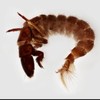
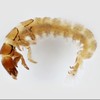
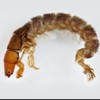
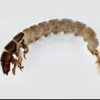
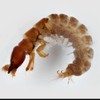
38 species in North America. Often found with another blackfly genus Simulium. They occur in various sized streams as long as there is flowing water. They attach to various objects in the substrate, including trash. They produce a silk thread from their mouths and use it to attach to the substrate with the aid of small hooks on the last segment.
diagnostic character
Branching Retreat
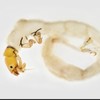
Larvae make branching tube-like retreats buried in sand or soft sediment, except tips of branches sticking above sediment. You can find these by using a seave in soft sandy sediment, look for branching sandy tubes, often with a bulbus end on one of the branches, carfully pull it apart to find the larva.
family
Ephemeroptera
Ephemeridae, “Burrowing Mayflies”
Larvae of the mayfly family Ephemeridae have large, distinct mandibular tusks projecting forward from the head, used to help burrow in soft silty sand or marl along the edges of still-water habitats or along the quiet parts of streams. They react negatively to light and immediately burrow back into the sediment if removed. Larvae also have feathery gills along the abdomen, giving them a rather “fluffy” appearance from the dorsal side. They are able to undulate these gills in order to increase flow of water for oxygen intake, which is especially important in the burrows where there is little water flow. The adults of this group are popular for fly-fishing enthusiasts because they are relatively large, and the duns (flying subadults) emerge in large numbers. The larvae are also sometimes used as bait.
family
Plecoptera
Pteronarcyidae, “Giant Stoneflies”
The giant stoneflies are identifiable by two main features. The head of these larvae appears to be tilted downward, because it a vertical orientation. Pteronarcyidae have gills on both thoracic and abdominal segments. It is one of only two families of stoneflies to have thoracic gills. These large stonesflies are shredders, eating mostly algae and decomposing leaf litter. Giant stoneflies are fairly sensitive to pollution and can be used to indicate good water quality.
family
Isopoda
Asellidae, “Aquatic Sow Bugs”
Isopods are a type of non-insect arthropod, or crustacean. Most isopods live on land, however there are approximately 100 North American aquatic species, mostly belonging to the family Asellidae. They tend to be rather flat from top to bottom, not laterally. They often have mottled coloring. These are usually bottom dwelling sprawlers, found in shallow, freshwater habitats. Usually they are omnivores or detritivores. Asellus communis is sometimes used for fly fishing in slow water areas with lots of plant growth.
family
Trichoptera
Limnephilidae, “Northern Casemaker Caddisflies”
This is one of the more diverse familes in northern latitudes, including 252 species in 41 genera in North America. Only a few species of this group live in the Midwest and South, which is why they are often called "Northern Caddisflies." They can be found in a variety of lotic and lentic habitats and have varying habits which become more specific at the genus and species levels of taxonomic refinement. Most are shredding or scraping herbivores or detritivores. This group is well known for their diversity in cases materials and architecture, which at the genus or species level can often be used to aid in identification.
genus
Ephemeroptera
Isonychiidae
Isonychia
Isonychia is the only genus in the family Isonychiidae. There are about 15 known North American species. They have a widespread distribution east of the Rocky Mountains, and tend to be found swimming in fast flowing water. They have a fusiform, minnow-like body shape, making them strong swimmers and clingers. Long setae (hair) on the inner margins of the femora and tibia of forelegs are used for filter feeding, a trait unique to this group of mayflies. They are important in the trout and fly fishing community due to their frequent but periodic hatches (emergence of subimagos) in June–October.
family
Trichoptera
Psychomyiidae, “Net-tube Caddisflies”
This family includes 5 North American genera with 17 species. The larvae often build tubular retreats, the tops of the structures are camouflaged with silk and pieces of detritus and pieces of substrate. They use the retreat to collect and gather food. As they add to the length of the tube to extend their grazing space, they occasionally harvest the old portion where they have cultivated periphyton. The larvae can be distinguished from other similar looking groups (such as the Philopotamidae) because the Psycomyiidae are the only caddisfly larvae with the foretrochantins (pair of hard projections between forecoxae and head) hatchet-shaped.
family
Megaloptera
Corydalidae, “Hellgrammites, Dobsonflies, Fishflies”
There are 6 genera in this family including about 20 species. The larvae are engulfing predators actively search for food, mostly small invertebrates. Members of this family tend to be found in the fastest part of the riffle, among the rocks; however, some species can be found in still water as well. The larvae (hellgrammites) are often preferred as live bait by fishermen due to their high activity and long life on a hook, making them more likely to attract fish. Adults probably do not feed. Males of some species have very long sword-like mandibles used in mating rituals. (Females prefer males with large jaws.)
family
Odonata
Libellulidae, “Skimmers”
This is a group of 90 North American species, the most of any dragonfly family. Nymphs can be found in a variety of lentic habitats including wetlands, ponds, and ditches, as well as along the margins of slow-flowing lotic habitats. They can be found sprawling on the benthos or climbing plants and woody debris. Some species are extremely tolerant of low oxygen concentrations in the water as well as high alkalinity, and brackish water habitats. Nymphs can sometimes be used for fly-fishing in still water habitats. The adults seem to fly in rather unpredictable flight trajectories and tend to have wings patterned with pigment.
genus
Trichoptera
Dipseudopsidae
Phylocentropus
Phylocentropus is the only genus in the family Dipseudopsidae in North America, with 5 species occurring here. Larvae make branching tube-like retreats buried in sand or soft sediment, the tips of the branches poke above the sediment. They tend to live in pools or along the edges of slow-moving water. They are found throughout the eastern and central United States. A large, movable spinneret is used to produce silk and shore up the sides of the retreat. Characters unique to this group include a large hump between membranous meso- and metanota, and flattened tarsi longer than their tibiae.
family
Hemiptera
Gerridae, “Water Striders”
There are about 46 North American species of water striders in 9 genera. Using water-repelling hairs on their tarsi (feet) to stay on top of the water and water-surface-penetrating claws to gain purchase in the water-surface tension, these familiar insects skate rapidly on the surface of open water of lentic habitats and slowly flowing areas of streams. Their movements are clumsy on shore. Because adults often lack wings, distinguishing nymphs from adults requires careful examination of genital structures. Both larvae and adults feed on living and dead insects trapped on the water surface.
family
Ephemeroptera
Caenidae, “Small Square-gilled Mayflies”
This family includes over 30 North American species in 4 genera. They prefer slow-moving or stagnant water where there is an abundance of silt and loose sediment and are often found sprawled on/in the silt or climbing among the plants. They tend to be slow-moving and often partially cover themselves in sediment, making them difficult to spot. They feed by filtering or collecting and gathering tiny bits of food or by scraping algae and biofilm from rocks and other substrates in their habitat. Several genera in this group can be useful to fly-fishermen, but due to the short life-span, it can be difficult to time your fishing trip just right or you will miss the "hatch" (eclosion or emergence as adults).
family
Ephemeroptera
Isonychiidae, “Brush-legged Mayflies”
Isonychia is the only genus in the family Isonychiidae. There are about 15 known North American species. They have a widespread distribution east of the Rocky Mountains, and tend to be found swimming in fast-flowing water. They have a fusiform, minnow-like body shape, making them strong swimmers and clingers. Long setae (hair) on the inner margins of the femora and tibia of forelegs are used for filter feeding, a trait almost unique to this group of mayflies (also occurring in the rare family Oligoneuriidae). They are important in the trout and fly fishing community as "Slate Drakes" due to their frequent but periodic hatches (emergence of subimagos or "duns") and return to the water surface as spent adults (imagoes or "spinners") in June–October.
family
Ephemeroptera
Baetidae, “Small Minnow Mayflies”
This family includes roughly 152 North American species and 22 genera. The larvae of this family are usually found in lotic-erosional or lotic-depositional habitats. They tend to be clingers and strong swimmers due to their streamlined, minnow-like body shape. They feed by collecting and gathering food, or by scraping algae and periphyton from rocks and detritus. Adults tend to swarm nearby in open areas after emergence. Duns and spinners of this group are frequently used as models for tied flies in the fly-fishing community. Larvae in this group can be tricky to identify and can be easily mistaken for other families such as the Siphlonuridae and Isonychiidae; however, but with careful attention to detail and patience, they can be separated.
genus
Trichoptera
Philopotamidae
Chimarra
The larvae of this species are usually yellow or light orange in color, but turn white when preserved in ethanol. They live in warmer rivers where the larvae spin net-like retreats, used to filter detritus from the water for food. Sometimes the mesh is uniformly spaced, like other net spinners, but usually the mesh of these retreats is dense and irregular. The nets also tend to be clustered in groups of 5 or 6, and are found in crevices on the undersides of rocks, where the water can channel through. Fly-fishing enthusiasts sometimes tie their flies to mimic these larvae; they refer to them as yellow or orange caddisworms. The larvae can be distinguished from other genera in the family by the very asymmetrical, large notch at the anterior margin of the frontoclypeus.
order
Lepidoptera, “Aquatic Caterpillars, Snout Moths”
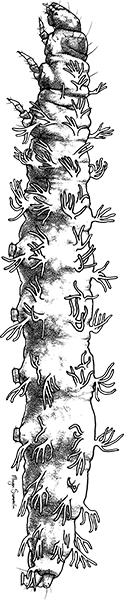
As the larvae of the butterflies and moths, most caterpillars possess highly terrestrial life histories. However, a rare few experience their larval lives underwater in the rocky substrates of streams and rivers or among the aquatic vascular plants of streams, lakes, or ponds. Here, herbaceous aquatic caterpillars often exhibit the same preference for host plants as their terrestrial counterparts, using their chewing mouthparts to graze microflora or feed on certain species of aquatic vascular plants. Like land-dwelling caterpillars, aquatic caterpillars are distinguished by their elongated, somewhat cylindrical bodies, distinctive heads with at most simple eye spots, three pairs of legs on the thorax, and short pairs of prolegs along the bottom of the abdomen.
family
Trichoptera
Dipseudopsidae, “Pitot-tube Caddisflies”
Phylocentropus is the only genus in the family Dipseudopsidae in North America. Larvae burrow in sand or soft sediment and stabilize the walls of their burrow by shoring them with silk extruded from a long, movable spinneret. The tips of the branching burrow protrude above the sediment, looking like little sticks. A side branch of the retreat is enlarged and contains a silken net used to filter tiny bits of organic matter for food. They tend to live in pools or along the edges of slow-moving water. They are found throughout the eastern and central United States. Characters unique to this group include a large hump between membranous meso- and metanota, the especially long spinneret, and flattened tarsi longer than the tibiae.
order
Hemiptera, “True Bugs”
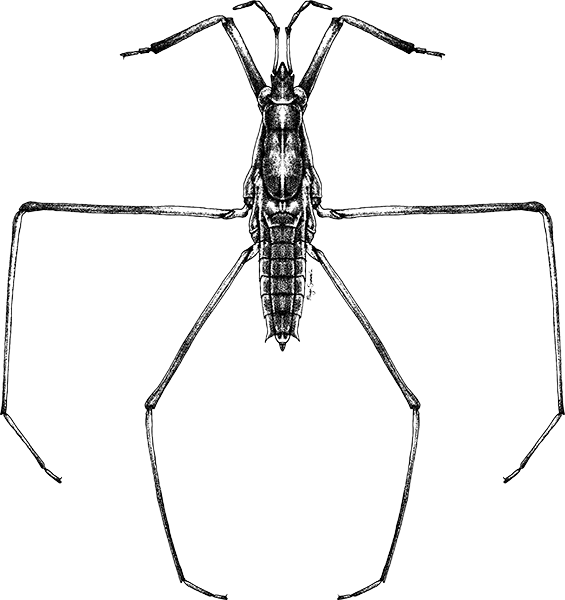
Although many aquatic macroinvertebrates are affectionately called “stream bugs,” the Hemiptera comprise the only “true bugs” of all insect orders. Both adults and larvae can be aquatic and occupy the same habitat, with both stages distinguished by piercing-sucking mouthparts that may consist of an elongate beak or short cone jutting from their front of the head and projecting back. Hemimetabolous true bug larvae exhibit wing pads on the thorax, which will become one pair of soft hind wings one pair of hemielytra. Most aquatic true bugs act as piercer-predators as both larvae and adults, meaning they seize their prey with their front legs before using their specialized mouthparts to pierce and suck their meal clean.
family
Coleoptera
Dryopidae, “Long-toed Water Beetles”
This family is relatively small, with only 5 North American genera, including 13 species. The family is more diverse in the Oriental and Neotropical regions. Unlike most water beetles, the larvae of this family are terrestrial burrowers and only the adults are aquatic, usually found in riffles, although some less-common species can be lentic as well. They are shredding herbivores and scrapers. The long claws of the adults make them good clingers and climbers on woody debris and other substrates. Similar to the Elmidae, these adult beetles use a plastron (thin layer of air held against the spiracles) to obtain oxygen from the water and usually don’t need to surface for air. These adult beetles can have a fairly long life-span, with the life cycle taking up to two years in some cases.
family
Diptera
Limoniidae, “Limoniid Crane Flies”
Limoniidae, previously a subfamily of Tipulidae (Limoniinae), are now considered their own family. Both Limoniidae and Tipulidae are part of the larger group of crane flies, Tipulomorpha. Often these are relatively large, grey or white, soft-bodied, legless larvae. The head is inconspicuous, mostly retracted into the thorax and almost completely hidden from view. They are often sold in bait shops, or used as models for tied flies, especially for bass fishing. Usually, larvae are found burrowing in soft sediment of streams, often near algae or woody debris; but some larvae are terrestrial. They vary in feeding strategy, some are predators while others are shredding detritivores and herbivores. Most species have only 1 generation per year. Pupa usually are found in marginal habitats. Adults resemble giant mosquitoes, with long, delicate legs; however, they do not bite.
family
Odonata
Aeshnidae, “Darners”
The dragonfly family Aeshnidae includes 10 genera. Aeshna is the largest genus, including 20 out of 38 North American species in the family. Like most dragonfly larvae, members of this family are predators, feeding on invertebrates and even small fish by stalking their prey. They can be found climbing on aquatic plants or root masses, in still or slowly flowing water. They are sometimes used as models for tied flies for fly-fishing; usually larger species are imitated, and the hook made to sink and be teased along the bottom to mimic their behavior. The adults are perchers, meaning when flying they will frequently pause to rest on branches or other prominent objects for a few seconds before taking off again. Some species migrate, flying South in winter, and as far north as Canada in the summer.
order
Odonata, “Dragonflies and Damselflies”
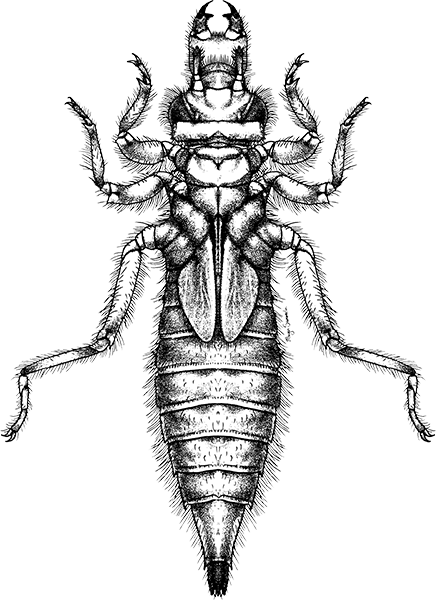
Commonly found in standing waters (lentic systems) or slow-moving running waters (lotic systems), these fierce underwater predators remain one of the most fundamentally aquatic insect orders, with all known North American nymphs spending their young lives underwater. The Odonata can be divided into 2 suborders: the Anisoptera (the dragonflies) and the Zygoptera (the damselflies). Nymphs are distinguished by their large eyes, wing pads on the thorax, and an elbow-like “lower lip” or labium, which can project from the head to strike/seize prey or tuck neatly under the head when not in use. Dragonflies are known for their stout bodies, heads narrower than the thorax and abdomen, and three short, wedge-shaped structures at the end of the abdomen. Damselflies, meanwhile, exhibit slender bodies, heads wider than the thorax and abdomen, and three long, leaf-like caudal lamellae at the end of the abdomen that can facilitate gas exchange.
family
Diptera
Chironomidae, “Non-Biting Midges, Midges”
This group is estimated to include up to 2,000 North American species. It is the most widespread and often most abundant aquatic insect family. The larvae and pupae can be found in almost any aquatic habitat. They live on the bottom, sometimes within slender tubes of silk and detritus. The larvae must be slide-mounted in order to be identified to genus. Different species vary greatly in pollution tolerance. Shed pupal skins can be collected from surface water and identified, sometimes more easily than for larvae or adults. Larval feeding strategies vary greatly, ranging from collector-gatherers, to predators. Larvae are often abundant and an important link of the food web, as most aquatic predatory species use them as a primary food resource at some point during their life cycle. The larvae pupate on the bottom, and then the pupae swim to the surface to emerge as adults, which usually survive for only a few days to mate and lay eggs.
genus
Trichoptera
Rhyacophilidae
Rhyacophila
Rhyacophila is the only genus from the family Rhyacophilidae in the United States east of the Rocky Mountains; it is widespread except less common in the Great Plains (absent from southern Great Plains). The larvae exhibit a variety of feeding strategies, they may be engulfing predators, especially as mature larvae, but also collector-gatherers, scraper-grazers, or shredder-herbivores. Larvae are free-living, meaning that they do not live in a case or retreat, but simply move throughout the environment, clinging to the substrate and pursuing prey. Before pupation, they build a rock shelter and spin a semipermeable cocoon inside it. Larvae are often, but not always, green in color, and often have well-defined segments, giving the body a beaded appearance. They can be readily identified using the following characters: sclerotized pronotum, membranous meso- and metanota, abdominal tergum IX with a sclerite, and anal prolegs free, not closely fused to segment IX.
family
Trichoptera
Philopotamidae, “Finger-net Caddisflies”
This family includes 1,484 species globally and 76 species in North America. Their preferred habitat is riffles, where their nets can be found on the undersides of rocks. The larvae spin wind-sock like nets with ultrafine mesh that are held open by the current, which they use to filter feed on very small bits of detritus, algae, and even small animals. These nets are positioned beneath the rocks and have the smallest mesh size known of all the net-spinning caddisflies. When removed from water, the nets collapse and look like brown slime. This group is unique in that it is the only group with a membranous labrum that is expanded along the distal edge, giving it a T-shape. However, sometimes when placed in ethanol or other preservatives, this soft labrum gets sucked into the mouth where it cannot be seen. The most common species, Dolophilodes distinctus, can emerge as adults year-round; however, females that emerge during the winter have very short stubby wings and are flightless.
family
Ephemeroptera
Ephemerellidae, “Spiny Crawler Mayflies”
This common and widespread group includes roughly 80 North American species in 9 genera. Larvae can be readily identified, as this is the only mayfly group with gills absent on abdominal segment 2. They tend to be found in lotic-erosional or depositional habitats, often among the rooted aquatic plants, moss, root masses, or woody debris. They usually are poor swimmers, swimming with a floppy motion, and instead sprawl or cling to the plants or other substrates in their habitat. The family has a variety of feeding strategies, differing among species, including collector-gatherers, scrapers, some shredders of detritus or algae, and even one predator. When a larva is disturbed it sometimes raises its tail over its head like a scorpion, possibly as an adaptation to fend off predators; however, they cannot sting. After emergence, adults sometimes swarm atypically high, even above tree tops. This group is one of the most important for the fly-fishing community, with at least 30 different species being used as models for tied flies.
family
Diptera
Ceratopogonidae, “Biting Midges”
Sometimes called No-See-Ums, Punkies, or Sand Flies, this fly family includes approximately 34 North American genera, encompassing over 100 species; though not all are aquatic, most genera have at least a few aquatic species. Aquatic/semiaquatic larvae can be found burrowing in damp sand along beaches, swimming and sprawling among plants in both flowing and still water habitats, sometimes even in water-filled tree holes or pitcher plants. Feeding habits vary greatly depending on the species and maturity of the larvae, they are often predators of aquatic insect eggs, others are collector-gatherers or grazers on periphyton and detritus. Aquatic pupae do not make cocoons; they stay near the water surface and use snorkel-like structures that protrude from the thorax to breathe air. Many adult females bite and feed on blood; they need the protein to produce eggs. The bites of most species cause an annoying itch; some terrestrial species are considered pests and can transmit human filarial worms and diseases of other birds and mammals.
genus
Hemiptera
Naucoridae
Pelocoris
Similar in appearence to Belostomatidae (giant water bugs) except that margins of eyes are contiguous with anterior margin of head in Naucoridae. Beak cylindrical and 3- or 4-segmented. Gula present. Antennae shorter than head and located beneath eyes, not readily visible dorsally. Middle and hind legs have fringe-like hairs, useful for swimming. Legs are raptorial, suitable for use in predation, with broad femora, and weakly convex dorsally.
family
Hemiptera
Naucoridae, “Creeping Water Bugs”
Similar in appearence to Belostomatidae (giant water bugs) except that margins of eyes are contiguous with anterior margin of head and retractile breathing straps absent from end of abdomen. Beak cylindrical and 3- or 4-segmented. Antennae shorter than head and located beneath eyes, not readily visible dorsally. Middle and hind legs with fringe-like hairs, useful for swimming. Legs are raptorial (suitable for use in predation) with broad femora, and weakly convex dorsally.
family
Trichoptera
Brachycentridae, “Humpless Casemaker Caddisflies”
Humpless casemaker caddisfly larvae are characterized by a 'humpless' first abdominal segment. The portable case is made from strips of organic material which is typically rounded and tube-like; several genera build square, four-sided cases. The "humpless" caddisfly lives where the currents are consistently swift, and are often found anchored to rocks at the heads of riffles.
order
Diptera, “True Flies”
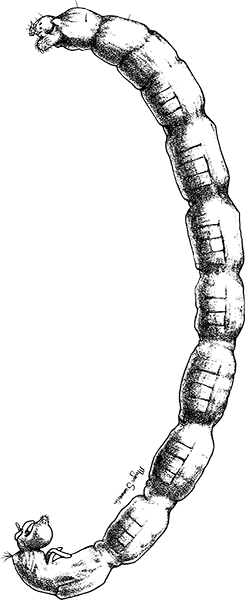
The Diptera are holometabolous, meaning they have egg, larval, pupal, and adult life stages. For aquatic species, all life stages except the adult usually are aquatic. Greater than 51,000 species are known to be aquatic or semiaquatic; this is more than the number of aquatic species in all other insect orders combined. Larvae in this order are often maggot-like and never have segmented legs. Adults can be readily recognized by the absence of hind wings; they have front wings, but instead of hind wings they have club-like appendages (halteres) used for balance during flight. Adult flies are often thought of as pests because some bite, some vector diseases such as malaria, or swarm in high numbers. However, both larvae and adults are important links in aquatic and terrestrial food webs.
order
Trichoptera, “Caddisflies”
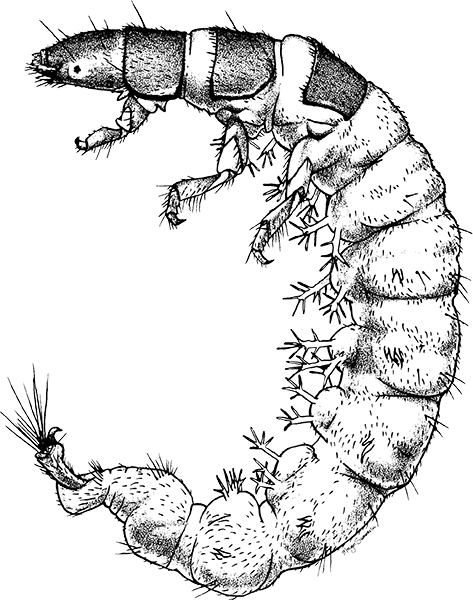
Caddisflies constitute the 7th largest order of insects, with over 16,000 species globally and 1.887 species in North America. They’re holometabolous, having egg, larval, pupal, and adult life stages. They spend most of their lives as larvae and can be found in almost all freshwater habitats. Collectively the species of the order are ecologically diverse. Different species are scrapers, detritivores, herbivores, filterers, and predators. Most larvae construct portable tube-like cases or fixed retreats, although some are free-living. The cases and retreats are made from rock or plant fragments glued together with silk from their mouth. Both cases and retreats are used for camouflage and physical protection as well as for improving efficiency of respiration by channeling oxygenated water across the undulating animal. Larvae can be identified by the usually-inconspicuous antennae and the pair of anal prolegs each bearing a single hook.